
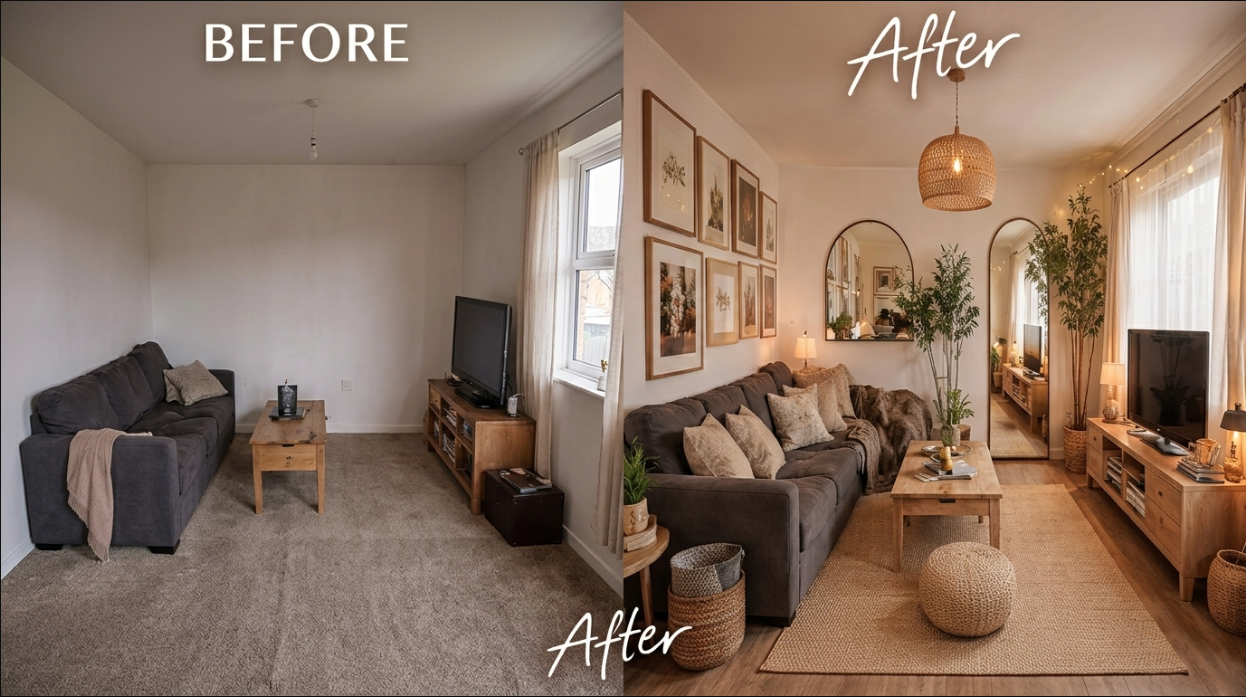
Small living rooms get a bad reputation. People assume they mean cramped furniture, dark corners, and no room to breathe. That’s not true. A tight space, decorated with the right choices, can feel calmer and more inviting than a large one that’s poorly planned.
If you’ve been scrolling through Pinterest boards feeling more confused than inspired, this guide is built differently. It skips the generic “use mirrors and light colors” advice you’ve read a hundred times already and focuses on decisions that genuinely change how a small living room looks and functions.
What Makes a Small Living Room Feel Bigger?
A small living room feels bigger when three things happen together: the floor stays visible, the eye has a clear path across the room, and clutter has a designated home. Color and lighting matter too, but they work best as support, not as the main fix.
Most guides stop at “declutter” and “use light paint.” Real results come from combining layout, furniture scale, and light in a way that matches your specific room shape — not a one-size-fits-all formula.
Choose Furniture That Fits the Room, Not the Showroom
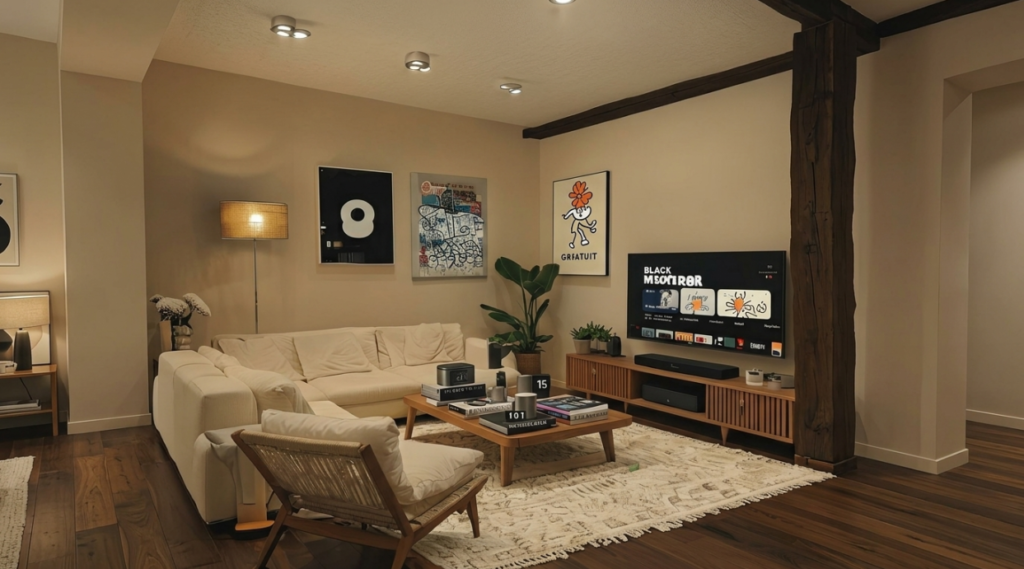
Furniture in stores is displayed in huge, well-lit spaces, which makes pieces look smaller than they really are. A sofa that seemed reasonably sized in the store can swallow a small room whole.
Before buying anything:
- Measure your room’s width and length, and mark out the sofa’s footprint on the floor with tape.
- Leave at least 30 inches of walking space around major furniture pieces.
- Choose a sofa with visible legs instead of a skirted base — it lets light pass underneath, which makes the floor feel more open.
A loveseat or a compact two-seater sofa often works better than a large three-seater in rooms under 150 square feet.
Pick a Layout Built Around Traffic Flow
Furniture arrangement affects a small living room more than color choice does. If people have to squeeze past a coffee table or walk around a chair to reach the door, the room will always feel cramped, regardless of how it’s decorated.
Simple Layout Rules That Help
- Float furniture away from walls when the room allows it — this creates a sense of depth.
- Angle a sofa toward a focal point (TV, fireplace, or window) rather than pushing everything flat against the wall.
- Keep at least one clear diagonal sightline from the entrance to the far corner of the room.
Use Multi-Functional Furniture
This is where a lot of small living rooms lose points. Every piece of furniture should do more than one job.
| Furniture Piece | Space-Saving Function |
|---|---|
| Ottoman with storage | Footrest, extra seating, hidden storage |
| Nesting tables | Expand for guests, tuck away when not needed |
| Console table with drawers | Entry surface plus hidden storage |
| Sofa bed | Everyday seating plus guest sleeping space |
| Wall-mounted desk | Fold-down workspace, disappears when not in use |
Let Color Do Real Work, Not Just Look Nice
Light colors help small rooms feel open, but an all-white room can feel flat and cold. A better approach is a light base color paired with one or two deeper accent tones.
- Paint walls in a soft, warm neutral (off-white, light greige, pale sage).
- Add one deeper accent color through pillows, a rug, or artwork.
- Avoid painting trim a stark white if walls are warm-toned — matching undertones keeps the room from feeling choppy.
Dark colors aren’t automatically bad for small rooms either. A small room painted in a rich, moody color with good lighting can feel intentional and cozy rather than cramped — this works especially well in rooms that get plenty of natural light during the day.
Layer Lighting Instead of Relying on One Source
A single overhead light creates flat, harsh shadows that make a small room look smaller. Layered lighting — a mix of ambient, task, and accent light — adds depth.
- Ambient light: ceiling fixture or flush mount for overall brightness.
- Task light: a floor lamp near the reading chair or sofa.
- Accent light: small table lamps or LED strips behind furniture to add a soft glow along the walls.
Warm white bulbs (around 2700K–3000K) tend to feel more comfortable in living spaces than cool white or daylight bulbs, which can feel closer to office lighting.
Use Vertical Space on the Walls
When floor space is limited, walls become valuable real estate.
- Install floating shelves above the sofa instead of a bulky bookshelf on the floor.
- Hang curtains close to the ceiling, not just above the window frame — this draws the eye upward and makes ceilings feel taller.
- Use tall, narrow bookcases instead of wide, short ones.
Choose a Rug That Anchors the Room Properly
A rug that’s too small is one of the most common small living room mistakes. It visually shrinks the space instead of expanding it.
A good rule: at least the front legs of every major piece of furniture (sofa, chairs) should sit on the rug. This ties the seating area together and makes the whole layout feel considered rather than scattered.
Keep Window Treatments Simple
Heavy drapes, layered valances, and thick blackout curtains can visually cut a small room in half. Simple, light-filtering curtains in a color close to the wall color help the window blend into the room instead of interrupting it.
Reduce Visual Clutter, Not Just Physical Clutter
Decluttering isn’t only about removing objects — it’s about reducing what the eye has to process. A shelf with fifteen small trinkets reads as “busy,” even if the room is technically clean.
- Group small decor items in odd numbers (three or five) rather than spreading them out individually.
- Rotate decor seasonally instead of displaying everything at once.
- Store remote controls, chargers, and mail in a closed box or drawer near the seating area.
Add One Statement Piece Instead of Many Small Ones
A small room can only handle a limited amount of visual “noise.” Instead of adding five small decorative items, choose one larger piece — a bold piece of art, a patterned accent chair, or a striking pendant light — and let it be the room’s personality.
Common Mistakes to Avoid
- Pushing every piece of furniture against the wall, which often wastes the center of the room.
- Using too many small rugs instead of one properly sized rug.
- Overloading shelves and walls with too many frames or objects.
- Choosing furniture with heavy, boxy frames instead of pieces with visible legs.
- Ignoring lighting temperature and relying only on one bright overhead bulb.
A Realistic Look at Budget
Small living room makeovers don’t have to be expensive, but expectations should stay realistic. Paint, a new rug, and better lighting can transform a room for a modest budget. Structural changes — like built-in shelving or custom furniture — cost more and take longer, but they’re not necessary for most rooms. Start with layout and lighting changes first, since they cost the least and make the biggest visible difference.
Conclusion
A small living room isn’t a design problem to hide — it’s a layout to solve. The rooms that feel the most comfortable usually aren’t the biggest ones; they’re the ones where every piece of furniture earns its place, the light flows naturally, and there’s a clear path to walk through. Start with one or two changes from this list — a properly sized rug, better lighting, or a furniture rearrangement — before buying anything new. Small, intentional changes almost always outperform a full room overhaul.
FAQs
What is the best color for a small living room?
Soft, warm neutrals like off-white, light greige, or pale sage generally make small rooms feel more open. A deeper accent color used sparingly adds warmth without shrinking the space.
Should I use a small or large rug in a small living room?
Choose the largest rug your budget and space allow. At minimum, the front legs of your main seating pieces should rest on the rug so the layout feels connected rather than scattered.
Is dark paint a bad idea for a small living room?
Not necessarily. A small room with good natural light can handle a deeper, richer color and still feel cozy rather than cramped. It works best when paired with layered lighting in the evening.
How much furniture is too much for a small living room?
If you can’t walk around the room without turning sideways or moving a chair, there’s too much furniture. Aim for at least 30 inches of clear walking space around major pieces.
Do mirrors really make a small living room look bigger?
They can help by reflecting light and views, but they work best as one part of a bigger plan that includes layout, lighting, and furniture scale — not as a stand-alone fix.
What’s the biggest mistake people make when decorating a small living room?
Pushing all furniture against the walls and leaving the center of the room empty. Floating furniture slightly and creating a clear traffic path usually makes the room feel more spacious.
For more updates visit: fundlly.co.uk









Comments 3