
A good skincare routine does not need to be complicated or expensive. The right daily habits can help keep your skin clean, comfortable and healthy-looking. Whether you are new to skincare or want to simplify your current routine, a few consistent steps can make a real difference.
Your skin can change with age, weather, lifestyle and products. That is why a skincare routine should focus on your skin type and its specific needs. A simple routine with the right products is often easier to maintain than a long routine with too many steps.
What Is a Skincare Routine?
A skincare routine is a set of products and habits used to care for your skin. Most routines include cleansing, moisturising and protecting the skin from the sun. Some people also add products that target concerns such as dryness, blemishes, uneven skin tone or signs of ageing.
The goal is not to use as many products as possible. Instead, a good skincare routine should support the skin barrier while addressing your personal needs. Consistency is usually more useful than constantly changing products.
Why Is a Daily Skincare Routine Important?
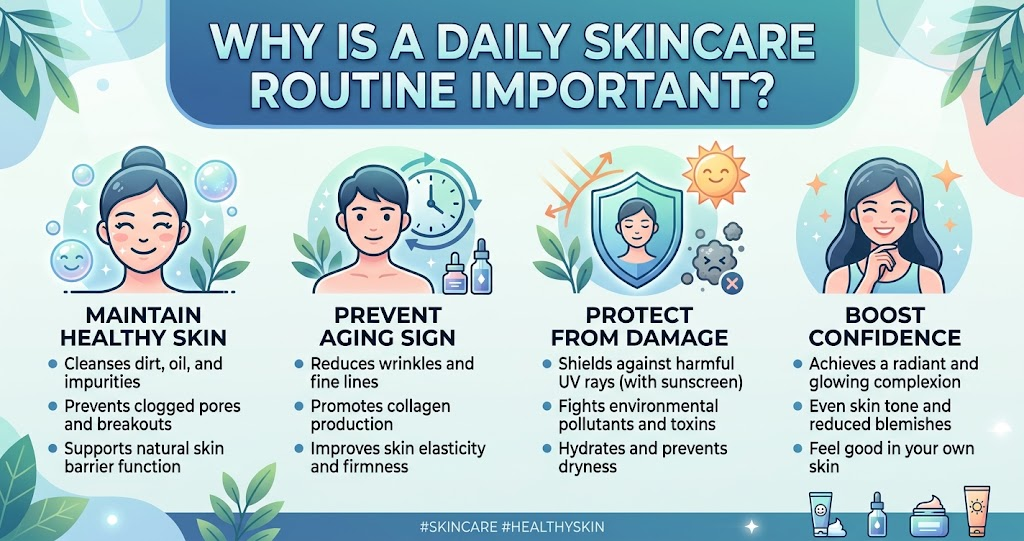
The skin is exposed to dirt, sweat, pollution and environmental factors throughout the day. Cleansing helps remove unwanted build-up, while moisturiser helps maintain hydration and comfort.
Sun protection is another important part of daily skincare. Regular exposure to ultraviolet radiation can contribute to premature skin ageing and other skin damage. Using sunscreen during the day can help protect exposed skin.
A simple routine can also help you understand how your skin reacts to different products. When you introduce products gradually, it becomes easier to identify what works well and what may cause irritation.
Morning Skincare Routine
A morning skincare routine can be simple. Start by gently cleansing your face, especially if your skin feels oily or sweaty after sleeping. Choose a cleanser that suits your skin and avoid harsh products that leave your face feeling tight.
After cleansing, apply a moisturiser. Even oily skin can benefit from moisturisation because removing too much natural oil can leave the skin feeling uncomfortable. A lightweight moisturiser may feel better for oily or combination skin, while a richer formula can suit dry skin.
The final step should be sunscreen when you are going outdoors or your skin will be exposed to daylight. A broad-spectrum sunscreen can help protect the skin from ultraviolet radiation. Apply it as directed on the product and reapply when needed.
Evening Skincare Routine
Your evening skincare routine is a good time to remove sunscreen, makeup and the day’s build-up from your skin. Use a gentle cleanser and avoid aggressive scrubbing.
Once your skin is clean, apply any targeted skincare product you use, followed by moisturiser. If you are introducing an active ingredient, start slowly and follow the product instructions.
Night-time skincare does not need to contain many products. A gentle cleanser and moisturiser may be enough for people who prefer a basic routine.
Skincare Routine for Different Skin Types
Understanding your skin type can help you choose suitable products. Dry skin often feels tight or rough and may benefit from gentle cleansing and richer moisturising products.
Oily skin can look shiny and may be more prone to clogged pores. A lightweight, non-comedogenic moisturiser can provide hydration without feeling excessively heavy.
Combination skin can have both oily and dry areas. In this case, using different textures on different parts of the face may be more comfortable.
Sensitive skin can react easily to new products. A simple routine with gentle, fragrance-free products may be easier to tolerate. Introduce new products one at a time so you can monitor your skin’s response.
How to Choose Skincare Products
Choosing skincare products becomes easier when you focus on your actual skin needs. You do not need every product that appears in social media trends.
Look for products designed for your skin type and avoid adding several strong active ingredients at the same time. If your skin becomes irritated, reduce the number of products and return to a basic routine.
When trying a new product, patch testing can be useful. Apply a small amount to an appropriate area according to the product guidance and watch for signs of irritation before using it more widely.
Common Skincare Routine Mistakes
One common mistake is using too many products too quickly. Adding several new products at once can make it difficult to know which product is helping or causing irritation.
Another mistake is cleansing too aggressively. Scrubbing hard or using harsh cleansers can make the skin feel dry and uncomfortable. Gentle cleansing is usually a better approach for everyday skincare.
Skipping sunscreen is another common problem. Even a well-planned skincare routine can miss an important part of daily skin protection if sun protection is ignored.
It is also helpful to avoid changing your routine every few days. Many skincare products need consistent use before you can judge how well they suit your skin.
How to Build a Simple Skincare Routine
If you are starting from scratch, keep your skincare routine basic. Begin with a gentle cleanser, a suitable moisturiser and daytime sunscreen.
Once your skin is comfortable with these products, you can consider adding a targeted product for a specific concern. Introduce one new product at a time rather than changing everything together.
Your routine should also be realistic. A routine that takes only a few minutes and fits naturally into your morning and evening is more likely to become a long-term habit.
Skincare Routine for Healthy-Looking Skin
Skincare products are only one part of caring for your skin. Everyday habits can also affect how your skin looks and feels. Protecting your skin from excessive sun exposure, keeping your routine gentle and avoiding unnecessary irritation can all support healthy-looking skin.
If you have a persistent rash, severe acne, unusual changes in your skin or ongoing irritation, consider speaking with a qualified healthcare professional or dermatologist. A professional can help identify the cause and suggest suitable treatment.
Conclusion
A good skincare routine does not have to be complicated. Cleansing, moisturising and using sunscreen can provide a strong foundation for everyday skin care. From there, you can add targeted products based on your skin type and individual concerns.
The most important part is consistency. Choose products that suit your skin, introduce new products gradually and avoid using more products simply because they are popular. With a simple and practical skincare routine, you can build habits that support healthy-looking skin over time.
FAQs
What is the best skincare routine for beginners?
A simple skincare routine for beginners usually includes a gentle cleanser, moisturiser and sunscreen during the day. Start with basic products before adding targeted treatments.
How many times a day should I follow a skincare routine?
Most people can follow a skincare routine twice a day, once in the morning and once in the evening. However, the exact routine can depend on your skin type and the products you use.
Should I moisturise if I have oily skin?
Yes. Oily skin still needs hydration. A lightweight, non-comedogenic moisturiser can help provide moisture without feeling overly heavy.
Is sunscreen important in a skincare routine?
Yes. Sunscreen is an important part of daytime skincare because it helps protect exposed skin from ultraviolet radiation. Use it according to the product instructions.
What should I apply first in my skincare routine?
Start with cleansing. After cleansing, apply other suitable skincare products according to their instructions, followed by moisturiser. Sunscreen should be the final daytime skincare step.
Can I use the same skincare routine every day?
You can usually keep the basic parts of your skincare routine consistent every day. However, some treatment products may have specific usage instructions and should not necessarily be used every day.
For more updates visit: FUNDLY