A reliable internet connection is important for work, streaming, gaming, and everyday browsing. When your connection feels slow, a speed test can show what is happening.
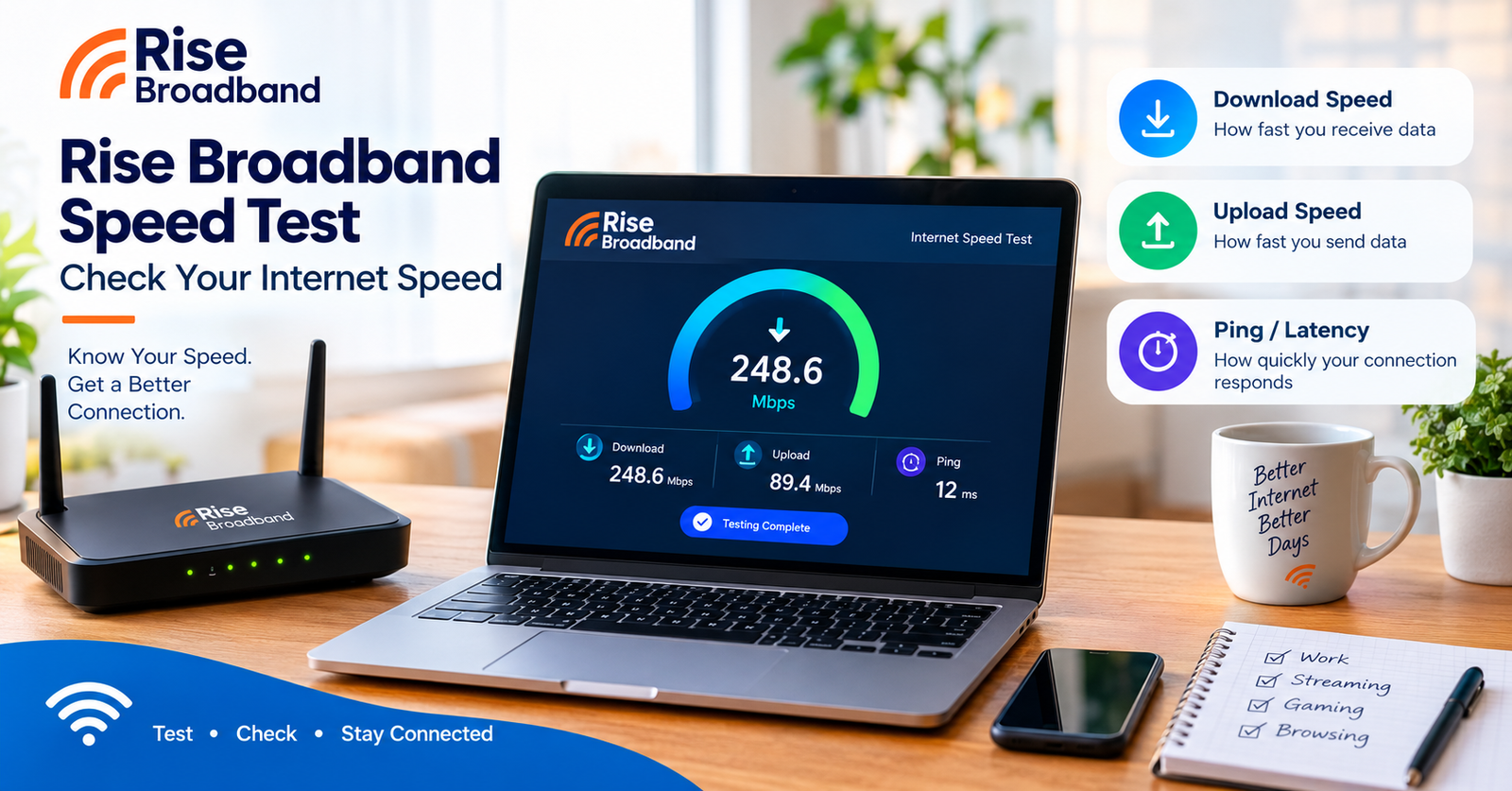
A Rise Broadband speed test measures key parts of your internet connection. These usually include download speed, upload speed, and ping. The results can help you understand whether your connection is performing as expected.
However, speed test results can change throughout the day. Your device, Wi-Fi signal, network traffic, and other factors can affect the result.
What Is a Rise Broadband Speed Test?
A Rise Broadband speed test checks how quickly data moves between your device and the internet. It gives you useful information about your current connection.
The most important result is usually download speed. This shows how quickly your connection can receive data. It matters when you stream videos, browse websites, download files, or use online services.
Upload speed measures how quickly your connection sends data. This becomes important when you upload files, make video calls, share photos, or stream content.
A test may also measure ping or latency. This shows how quickly your connection responds to a request. Lower latency is usually better for activities such as online gaming and video calls.
Why Should You Test Your Internet Speed?
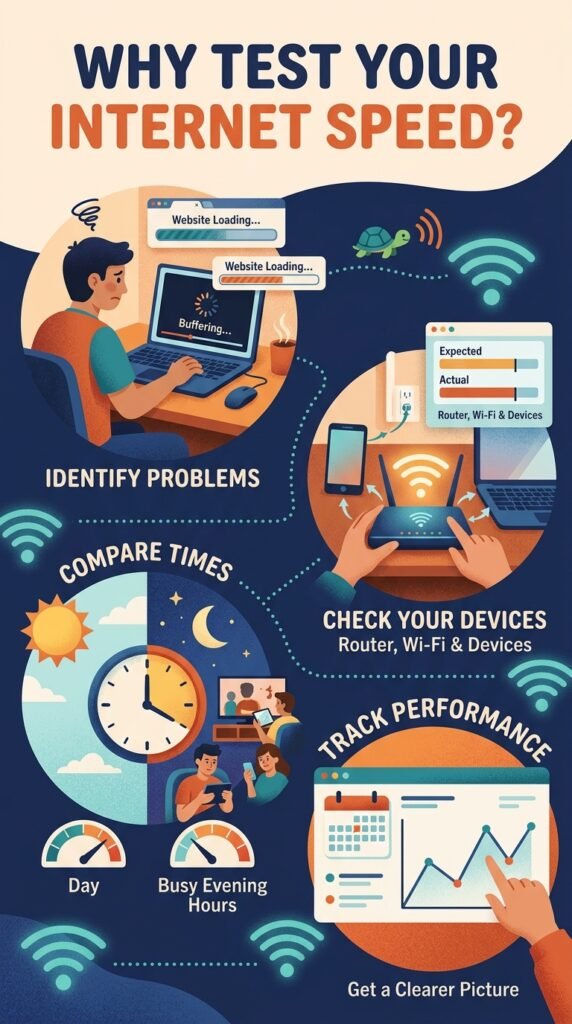
Running a broadband speed test can help you identify connection problems. If websites load slowly or videos keep buffering, the test can provide useful clues.
For example, your download speed may be much lower than expected. In that case, you can investigate your Wi-Fi, router, device, or broadband service.
Speed testing can also help you compare results at different times. Your connection may perform differently during busy evening hours.
Regular testing can therefore give you a clearer picture of your internet performance. One result alone does not always show the full situation.
What Does a Broadband Speed Test Measure?
A broadband speed test can measure several parts of your connection. Each result tells you something different about network performance.
Download Speed
Download speed measures how quickly your device receives information from the internet. It is often shown in Mbps, which means megabits per second.
Higher download speeds can make large downloads faster. They can also support smoother streaming and quicker loading of websites.
Still, speed is not the only factor that affects your online experience. Network congestion and Wi-Fi quality can also make a difference.
Upload Speed
Upload speed measures how quickly your device sends information to the internet. It can affect cloud backups, file uploads, video calls, and live streaming.
A connection with a good download speed may still have a weaker upload speed. Therefore, it is useful to check both measurements.
Ping and Latency
Ping measures the response time between your device and a server. It is normally shown in milliseconds.
A lower ping generally means a faster response. This can be especially useful for online gaming and real-time communication.
High latency can cause noticeable delays. However, the ideal result depends on the activity and the server being tested.
How to Get More Accurate Speed Test Results
The way you run a test can affect the result. For a more useful measurement, try to create consistent testing conditions.
Start by closing apps that use the internet. Streaming services, downloads, cloud backups, and other devices can use bandwidth in the background.
If possible, test with an Ethernet connection. Wired connections can reduce the interference and signal problems that may affect Wi-Fi results.
You can also run the test more than once. Testing at different times can reveal whether the issue is temporary or consistent.
Avoid judging your connection from a single result. Several tests usually provide a better picture of normal performance.
Why Is My Internet Speed Slower Than Expected?
There are many reasons for a lower speed test result. Your Wi-Fi signal is one common cause.
Distance from the router can reduce wireless performance. Walls, floors, furniture, and other electronic devices can also affect the signal.
Network congestion may cause slower speeds as well. If many devices are using the same connection, available bandwidth can become limited.
Your device can also play a role. Older hardware, background applications, browser issues, or system problems may affect performance.
Sometimes the problem may relate to the broadband connection itself. If several devices show similar results, further troubleshooting may be useful.
Wi-Fi Speed vs Wired Speed
A speed test over Wi-Fi can produce different results from a wired test. Wi-Fi performance depends on signal strength and wireless conditions.
A wired connection usually provides a more stable connection between your device and router. It can therefore help when you want to check the underlying broadband performance.
This does not mean Wi-Fi is always slow. Modern wireless technology can provide strong speeds when conditions are good.
If Wi-Fi results are much lower than wired results, the wireless setup may need attention. Moving the router or reducing interference can sometimes help.
When Should You Run a Rise Broadband Speed Test?
You can run a test whenever your internet connection seems unusually slow. It can also help when you experience frequent buffering, delays, or connection problems.
Testing at different times can be useful. For instance, you might compare morning and evening results.
You should also test after making changes to your network. A new router, different connection method, or improved Wi-Fi position can affect performance.
If you contact your broadband provider about a speed problem, recent test results can also help explain the issue.
How to Improve Your Internet Speed
Improving your connection starts with finding the cause of the problem. If Wi-Fi is responsible, try moving your router to a more open and central location.
Restarting your router can also help with temporary connection issues. Make sure your router has adequate ventilation and remains powered correctly.
Reduce unnecessary internet activity while testing. Large downloads and video streaming can use significant bandwidth.
For demanding activities, consider using an Ethernet cable. This can provide a more stable connection than Wi-Fi.
If your speed remains consistently low across multiple devices and tests, you may need to investigate your broadband service or package.
Understanding Your Speed Test Results
There is no single speed that is perfect for every household. Your ideal connection depends on how many people use it and what they do online.
A person who mainly browses websites may need less bandwidth than a household that streams high-quality video on several devices.
Online gaming also depends on latency and connection stability. A very high download speed does not automatically guarantee a smooth gaming experience.
For this reason, look at the complete test result. Consider download speed, upload speed, ping, and connection stability together.
Rise Broadband Speed Test vs Other Speed Tests
A broadband speed test can measure your connection using different testing services. Results may vary because each test can use different servers and testing methods.
That does not necessarily mean one test is wrong. The distance between your device and the test server can influence latency and performance.
For better comparisons, use the same test method under similar conditions. This makes it easier to identify changes in your connection.
The goal is not simply to get the highest number. Instead, focus on whether your connection performs well for your normal online activities.
Conclusion
A Rise Broadband speed test is a simple way to understand your internet performance. It can show download speed, upload speed, and latency.
For reliable results, reduce background activity and test under consistent conditions. A wired connection can also provide a useful comparison with Wi-Fi.
Remember that one test does not tell the whole story. Run several tests if you notice ongoing problems.
By understanding your results, you can identify possible Wi-Fi issues, network congestion, or wider connection problems. That makes it easier to decide what to troubleshoot next.
FAQs
What is a Rise Broadband speed test?
A Rise Broadband speed test measures the performance of your internet connection. It can show download speed, upload speed, and ping or latency.
What is a good broadband speed?
A good broadband speed depends on how you use the internet. Basic browsing needs less bandwidth than streaming, gaming, video calls, or using several devices at once.
Why is my download speed slow?
Slow download speeds can result from weak Wi-Fi, network congestion, background downloads, device issues, or broadband problems. Testing several times can help identify a pattern.
Why is my upload speed lower than my download speed?
Many broadband connections provide different download and upload speeds. Downloading is often prioritised for common home internet use.
Does Wi-Fi affect speed test results?
Yes. Wi-Fi signal strength, distance from the router, interference, and network traffic can affect your results. A wired test can provide a useful comparison.
What does ping mean in a speed test?
Ping measures how quickly your connection responds to a server request. It is measured in milliseconds, and lower latency is generally better for real-time activities.
For more updates visit: FUNDLY