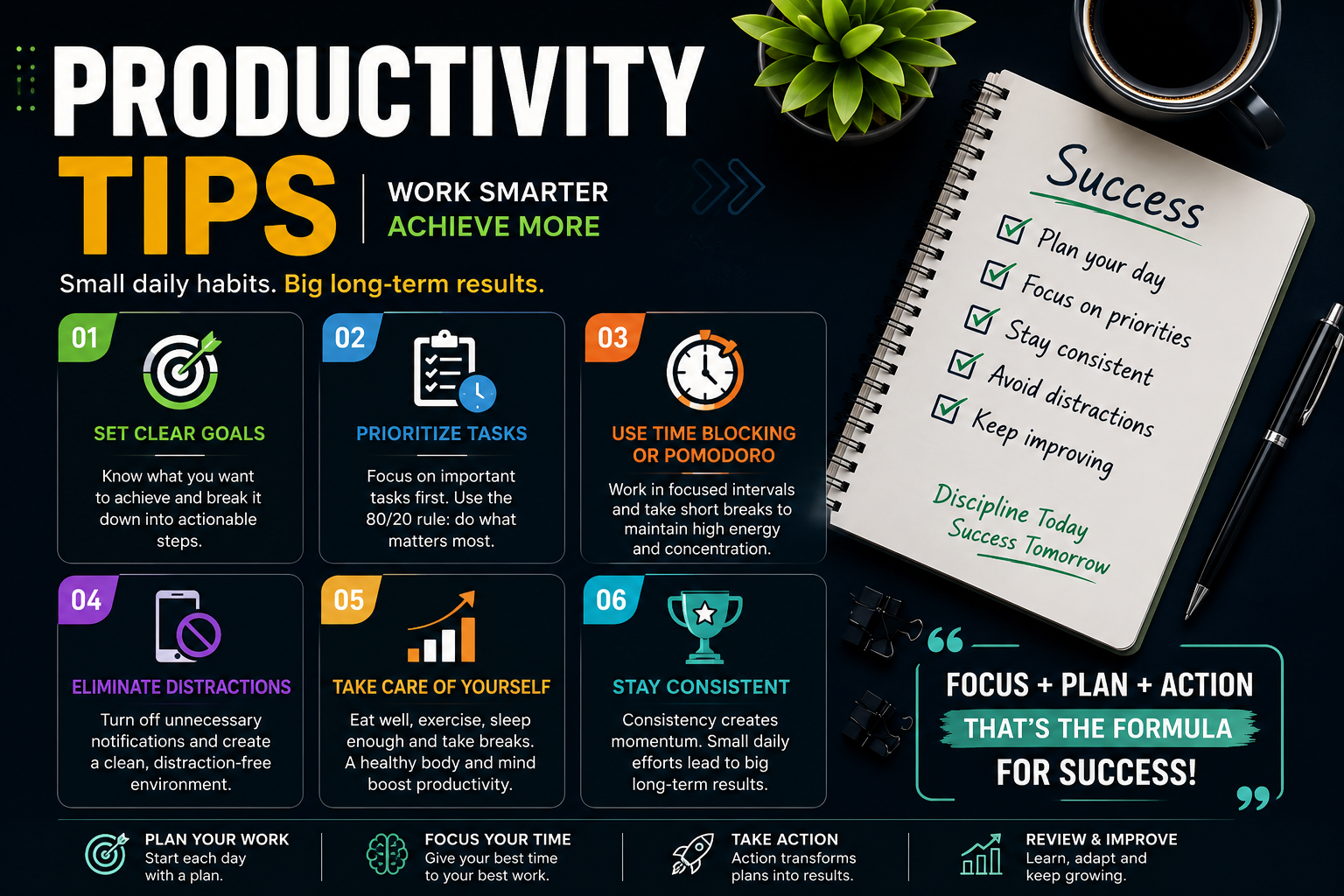
Being productive does not mean filling every minute with work. Real productivity means using your time well and making steady progress on things that matter. The right productivity tips can help you work with more focus, avoid distractions, and finish important tasks without feeling overwhelmed.
You do not need a complicated system to become more productive. Small changes can make a big difference. A clear plan, a focused workspace, regular breaks, and realistic goals can improve the way you work each day.
Start Your Day With a Clear Plan
A productive day often starts before the first task begins. Take a few minutes to decide what you need to accomplish. Choose the tasks that will have the biggest impact rather than trying to finish everything at once.
Keep your daily plan simple. Pick two or three important tasks and give them your attention first. Once those tasks are complete, you can move on to smaller jobs.
A clear plan also reduces decision fatigue. You spend less time wondering what to do next and more time doing meaningful work.
Set Priorities Instead of Chasing Every Task
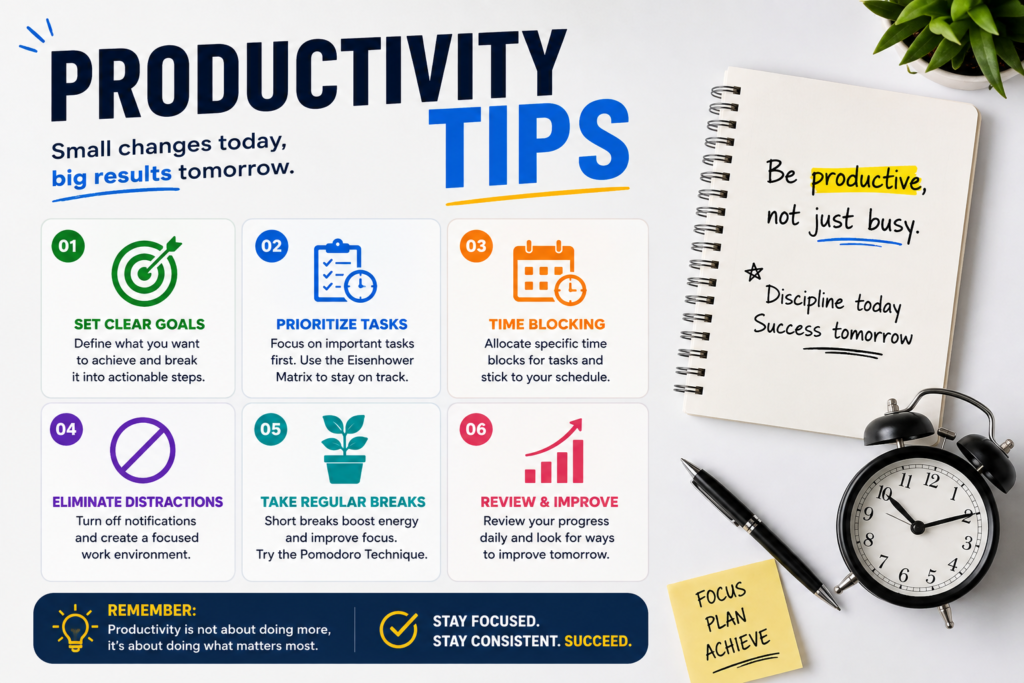
Not every task deserves the same level of attention. Some jobs affect your goals more than others. Identify those tasks before you start working.
Ask yourself which task would make the biggest difference if you completed it today. Start there. This approach helps you avoid spending your best hours on minor jobs.
You can also group similar tasks together. For example, answer emails at set times instead of checking your inbox every few minutes. This keeps small tasks from breaking your focus.
Use Time Blocking to Protect Your Focus
Time blocking is a simple way to organise your working hours. You assign a specific period to a particular activity. During that period, you focus on that activity instead of switching between different jobs.
For example, you might spend the first hour writing, the next hour handling messages, and another period on meetings or research. The exact schedule depends on your work and personal routine.
Time blocking can also make your day feel more manageable. Instead of looking at a long list of unfinished work, you can focus on the task in front of you.
Remove Common Distractions
Distractions can quickly reduce your productivity. Phone alerts, social media, unnecessary meetings, and constant email checks can interrupt your attention.
Start by removing the distractions you can control. Turn off non-essential notifications and keep your phone away during focused work. If you work online, close browser tabs that you do not need.
A quieter environment can also help. Use headphones, choose a less busy workspace, or let people around you know when you need uninterrupted time.
Try the Pomodoro Technique
The Pomodoro Technique divides work into short periods of focused effort followed by brief breaks. A common approach uses 25 minutes of work followed by a five-minute break.
This method can help when a large task feels difficult to start. Instead of thinking about hours of work, you only need to focus on one short session.
You can adjust the timing to suit your needs. Some people prefer longer work periods when they need deeper concentration. The key is to work with focus and take regular breaks.
Take Breaks Without Feeling Guilty
Working continuously does not always produce better results. Your attention can drop when you spend too long on one task without a break.
Short breaks give your mind time to reset. Stand up, stretch, drink some water, or step away from your screen for a few minutes.
Longer breaks also matter. A proper lunch break or a short walk can help you return to work with a clearer mind.
Keep Your Workspace Simple
Your environment can affect how easily you concentrate. A messy desk, constant noise, or too many open apps can create unnecessary mental clutter.
Keep the items you need close by and remove things that compete for your attention. A clean workspace does not need to look perfect. It simply needs to support the way you work.
Digital organisation matters too. Keep useful files in clear folders and remove unnecessary browser tabs. A simple setup can make everyday work easier.
Avoid Multitasking
Multitasking may feel efficient, but switching between tasks can make focused work harder. Each time you move from one activity to another, your attention needs time to adjust.
Try single-tasking instead. Choose one important job and work on it until you reach a natural stopping point.
This approach works especially well for writing, studying, planning, coding, and other tasks that require concentration.
Set Realistic Goals
Large goals can feel overwhelming when they have no clear steps. Break them into smaller actions that you can complete within a day or week.
Instead of saying that you want to finish a major project, define the next useful action. You might research one section, write a draft, review a document, or complete a specific part of the project.
Small wins create momentum. They also make progress easier to measure.
Learn to Say No
One of the most useful productivity tips is learning when to decline extra work. Saying yes to every request can leave little time for your own priorities.
Before accepting a new task, consider whether it supports your current goals. Check your workload and decide whether the request needs your attention now.
A polite response can protect your time without damaging professional relationships. You can explain that you are currently focused on other priorities or offer a more suitable time.
Use Technology With Purpose
Technology can improve productivity when you use it carefully. Calendar apps, task managers, notes, reminders, and communication tools can help you organise your work.
However, too many tools can create more work. Choose a small set of tools that solve real problems. Your system should make tasks easier, not force you to spend hours managing the system itself.
Review your digital tools from time to time. Remove apps or notifications that no longer provide value.
Review Your Progress at the End of the Day
A short daily review can help you understand what works and what does not. Look at the tasks you completed and identify anything that needs attention tomorrow.
Do not judge your day only by the number of tasks you finished. Consider the importance of the work. Completing one valuable task may matter more than finishing ten minor jobs.
Use the review to improve your next day. If something repeatedly takes longer than expected, adjust your schedule rather than blaming yourself.
Build Better Productivity Habits
Good productivity usually comes from habits rather than sudden bursts of motivation. Create routines that make useful actions easier to repeat.
Start with one change. You might plan your day each morning, block focused work time, or stop checking messages during important tasks.
Once the habit feels natural, introduce another improvement. Gradual changes are easier to maintain than a complete routine overhaul.
Conclusion
The best productivity tips are practical, simple, and realistic. You can improve your work by setting clear priorities, protecting your focus, reducing distractions, taking regular breaks, and reviewing your progress.
Productivity is not about working every minute. It is about directing your energy towards useful work and creating a routine that you can maintain. Start with one or two changes today, then build from there.
FAQs
What are the best productivity tips for beginners?
Start with a simple daily plan, choose a few important tasks, and remove common distractions. You can also use time blocking and regular breaks to create a more focused routine.
How can I improve my productivity at work?
Set clear priorities before starting your workday. Focus on one task at a time, limit unnecessary notifications, and schedule specific periods for emails and meetings.
What is the easiest productivity tip to start with?
Planning your next day can be an easy starting point. Spend a few minutes deciding which tasks matter most, then begin the following day with a clear direction.
Does multitasking improve productivity?
Multitasking can make focused work more difficult because you repeatedly switch your attention. Single-tasking often provides a simpler way to concentrate on important work.
How does time blocking improve productivity?
Time blocking gives specific tasks dedicated periods in your schedule. This can reduce unnecessary switching and help you protect time for important work.
How often should I take breaks while working?
The right schedule depends on the person and the task. Short breaks during extended periods of focused work can help you reset your attention and maintain energy.
For more updates visit: FUNDLY