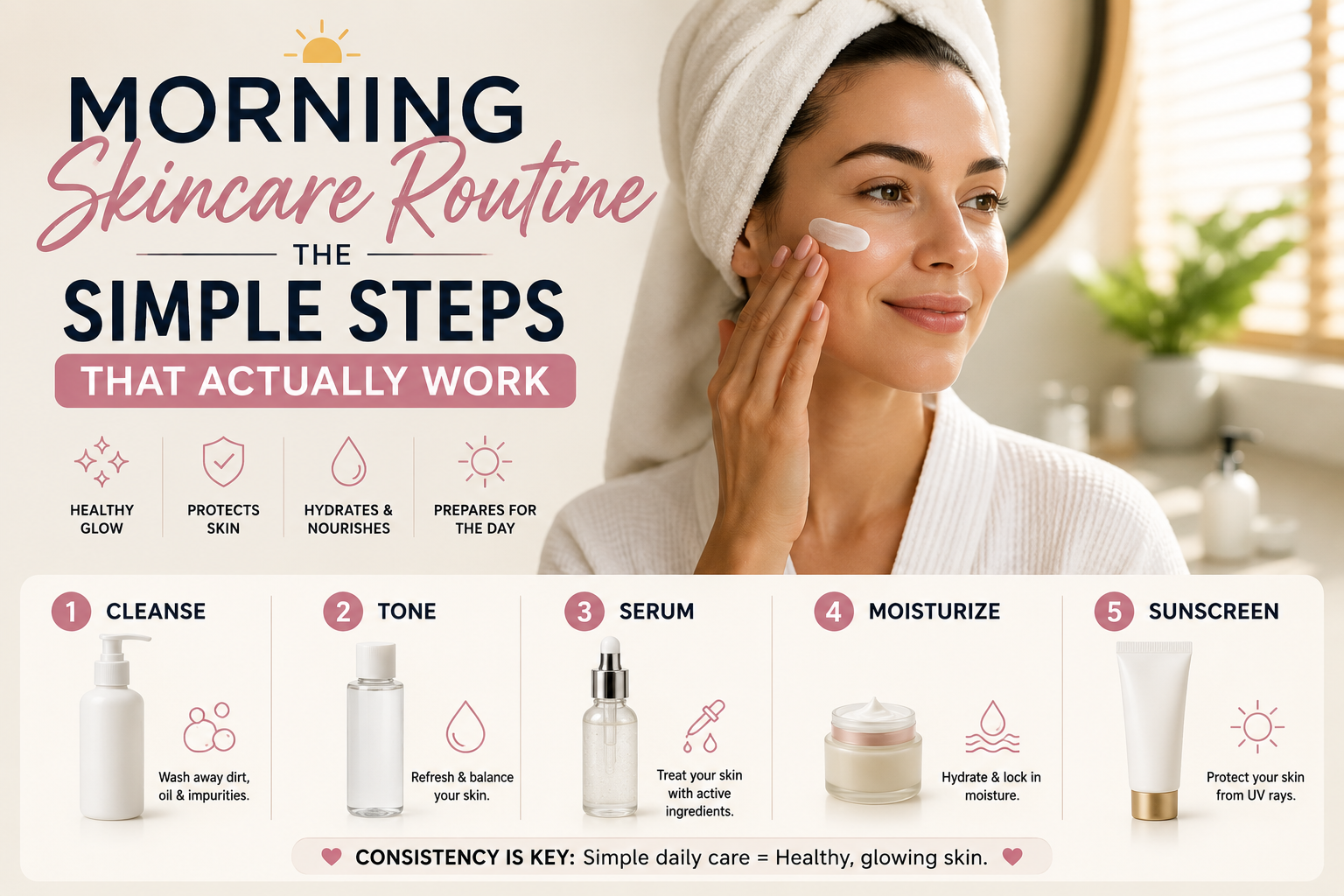
Most people either do too much before 8 a.m. or almost nothing at all. Neither works well. A good morning skincare routine isn’t about ten products and thirty minutes it’s about doing the right few things, in the right order, consistently.
If your skin feels dull by noon, gets oily fast, or reacts to new products constantly, the problem is often not your skin type. It’s your morning routine. Too many steps, wrong order, or missing the one product that actually protects your skin all day: sunscreen.
This guide walks through a realistic morning skincare routine that dermatologists generally agree on, explains why each step matters, and shows you how to adjust it for oily, dry, combination, or sensitive skin without wasting money on products you don’t need.
What Is a Morning Skincare Routine, Exactly?
A morning skincare routine is a short set of steps done after waking up to clean, protect, and prep your skin for the day ahead. Unlike a night routine, which focuses on repair and treatment while you sleep, a morning routine focuses on protection mainly against sun exposure, pollution, and moisture loss.
At its core, a morning routine has three non-negotiable steps:
- Cleanse
- Moisturize
- Protect (SPF)
Everything else serums, eye cream, toners is optional and depends on your skin’s specific needs.
Why Morning Skincare Matters More Than People Think
Skin repairs itself overnight, but during the day it’s exposed to UV rays, wind, pollution, and temperature changes. A 2020 review published in the Journal of Clinical and Aesthetic Dermatology noted that daily sunscreen use is one of the few skincare habits with strong, consistent evidence for preventing premature aging and reducing skin cancer risk. That single fact is why skipping SPF is the most common and most costly morning skincare mistake.
Beyond sun protection, a consistent morning routine helps by:
- Keeping your skin barrier intact, so it holds moisture better
- Reducing midday oiliness by balancing hydration properly
- Making makeup or SPF sit smoother on the skin
- Preventing the “catch-up” damage that shows up as fine lines or dark spots later
The Complete Morning Skincare Routine, Step by Step

Step 1: Cleanse (Gently)
You don’t need a harsh scrub in the morning. Your skin isn’t “dirty” the way it is at night after makeup and pollution exposure. A gentle, low-foam cleanser or even just lukewarm water is often enough to remove overnight oil and sweat without stripping your skin.
If your skin feels tight or squeaky after washing, your cleanser is too strong.
Step 2: Apply a Toner or Essence (Optional)
This step isn’t essential, but many people like it because it preps the skin to absorb the next products better. Look for alcohol-free, hydrating toners with ingredients like glycerin or hyaluronic acid rather than ones marketed for “deep pore tightening,” which often just contain drying alcohol.
Step 3: Add a Targeted Serum
This is where you address specific concerns:
- Vitamin C serum – helps brighten skin and supports collagen; pairs well with sunscreen since it adds antioxidant protection
- Niacinamide – good for oil control and uneven texture
- Hyaluronic acid – adds hydration without heaviness, good for all skin types
You don’t need all three. Pick one based on your main concern and give it a few weeks before judging results.
Step 4: Moisturize
Even oily skin needs moisturizer. Skipping it often causes the skin to produce more oil to compensate, which can make oiliness worse, not better. Choose a lightweight, gel-based moisturizer for oily or combination skin, and a richer cream for dry skin.
Step 5: Sunscreen — The Step You Cannot Skip
This is the single most important step in any morning skincare routine. A broad-spectrum SPF 30 or higher protects against both UVA (aging) and UVB (burning) rays. It should go on last, after moisturizer, and be reapplied every two hours if you’re outdoors for long periods.
Many people apply sunscreen once and assume they’re covered all day. In reality, sweat, touching your face, and time reduce its effectiveness, which is why reapplication matters if you’re outside for extended periods.
Morning Skincare Routine by Skin Type

| Skin Type | Cleanser | Key Product | Moisturizer | Extra Tip |
|---|---|---|---|---|
| Oily | Gel-based, foaming | Niacinamide serum | Oil-free, gel moisturizer | Avoid skipping moisturizer |
| Dry | Cream or milk cleanser | Hyaluronic acid serum | Rich, ceramide-based cream | Apply moisturizer on damp skin |
| Combination | Balanced gel cleanser | Light vitamin C serum | Lightweight lotion | Use richer cream only on dry patches |
| Sensitive | Fragrance-free, mild cleanser | Centella or soothing serum | Barrier-repair moisturizer | Patch test new products first |
Common Mistakes in a Morning Skincare Routine
- Skipping sunscreen on cloudy days. UV rays pass through clouds; skin damage doesn’t need direct sunlight.
- Over-cleansing. Washing with hot water or harsh cleansers twice can damage the skin barrier over time.
- Layering too many actives at once. Combining vitamin C, retinol-like ingredients, and exfoliants in the same morning routine can cause irritation. Mornings should stay simple; save stronger actives for night.
- Applying sunscreen before moisturizer dries. Give each layer a minute to absorb before adding the next product.
- Choosing products based on trends, not skin type. What works for one person’s skin may not suit yours, especially with sensitive or reactive skin.
How Long Should a Morning Skincare Routine Take?
For most people, five to ten minutes is realistic and sustainable. A routine that takes 30 minutes every morning is hard to maintain long-term, and consistency matters more than complexity. Dermatologists commonly recommend starting with the basic three steps and adding one product at a time, waiting a couple of weeks between additions to see how your skin responds.
ALSO READ: The Morning Skin Care Routine That Actually Works
Morning vs. Night Skincare Routine: What’s the Difference?
A morning routine is about protection — shielding your skin from environmental stress for the day ahead. A night routine is about repair — using treatments like retinoids or stronger exfoliants that work best without sun exposure interfering. This is also why sunscreen belongs only in the morning routine, and stronger actives like retinol usually belong at night.
Building a Routine That Actually Sticks
The best morning skincare routine isn’t the one with the most products — it’s the one you’ll actually do every single day. Start with cleanser, moisturizer, and sunscreen. Once that becomes a habit, add a serum if you have a specific concern you want to address. Give any new product at least three to four weeks before deciding if it’s working, since skin cycles take time.
If you have persistent acne, unexplained rashes, or reactions to multiple products, it’s worth seeing a dermatologist rather than experimenting indefinitely with over-the-counter options.
Final Thoughts
A morning skincare routine doesn’t need to be complicated to be effective. Cleanse, moisturize, and protect with sunscreen that’s the foundation everything else builds on. Add serums or extra steps only when you understand what your skin actually needs, and give any new product time before judging it. Consistency, not complexity, is what separates a routine that works from one that just sits in your bathroom cabinet.
FAQs
Do I really need sunscreen every day, even indoors?
If you’re near windows or spend any time outside, yes. UVA rays can pass through glass and contribute to premature aging, which is why daily SPF is recommended even on days you’re mostly indoors.
Can I skip moisturizer if my skin is oily?
No. Skipping moisturizer can actually increase oiliness because skin overproduces oil to compensate for dryness. Use a lightweight, oil-free formula instead of skipping the step.
Is a toner necessary in a morning skincare routine?
Not strictly. It’s an optional step that can help with hydration and product absorption, but a good routine works fine without it if you’re using a proper cleanser and moisturizer.
How soon will I see results from a new skincare routine?
Most skin concerns take four to eight weeks to show visible change, since skin renews itself in cycles. Judging a product after just a few days isn’t a reliable test.
What’s the right order to apply morning skincare products?
Generally: cleanser, toner (optional), serum, moisturizer, and sunscreen last. Thinner, water-based products go before thicker, cream-based ones.
Can I use the same products for morning and night?
Cleanser and moisturizer can often be shared, but sunscreen is a morning-only step, and stronger treatments like retinol are typically used at night to avoid sun sensitivity issues.
For more updates visit: FUNDLY