Picture this: you get home, unpack your groceries, and later that night you see a headline saying the exact brand of chicken salad in your fridge might carry Listeria. Now what? Do you toss it, return it, or wait it out?
That moment of confusion is exactly why understanding food recalls matters. In fact, they happen more often than most people realize sometimes several times a week yet most shoppers only pay attention when a recall makes national news. Meanwhile, the rest quietly pass by, even though they can affect the exact products sitting in your pantry right now.
So, this guide breaks down how food recalls actually work, who issues them, how to check if your food is affected, and what to do if it is without the jargon.
What Is a Food Recall?
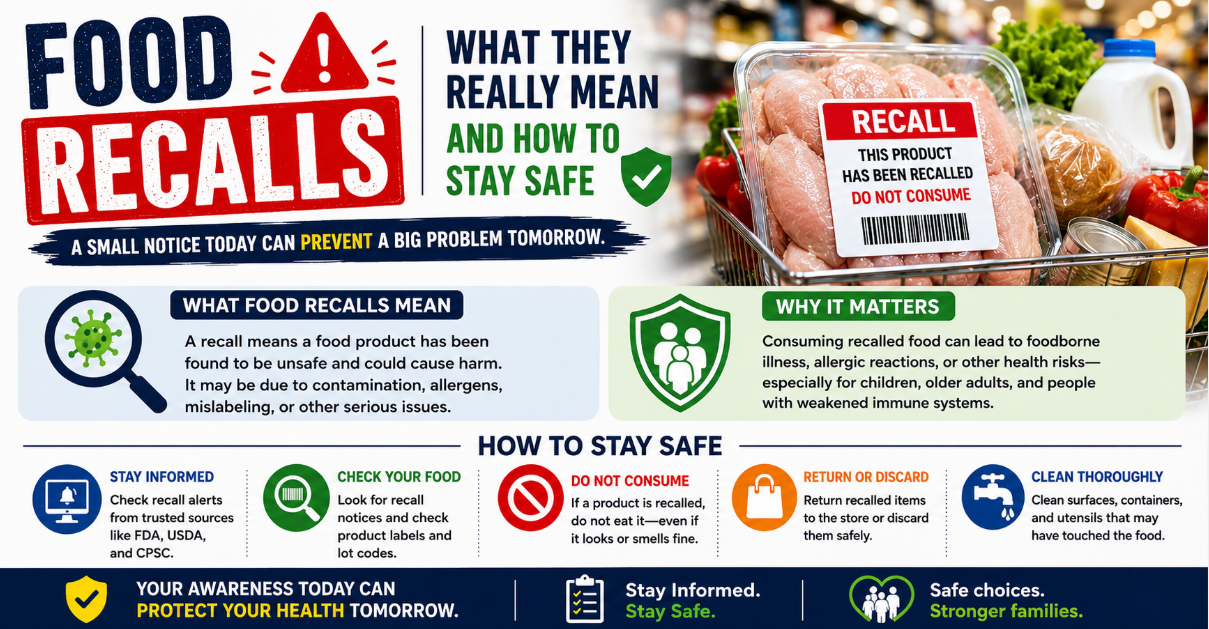
Essentially, a food recall happens when a company removes a product from the market because it may be unsafe to eat. Sometimes the company catches the problem itself. Other times, a government agency asks the company to act, or in rare cases, orders it directly.
So, what actually triggers a recall? Common reasons include:
- Bacterial contamination, such as Salmonella, E. coli, or Listeria monocytogenes
- Undeclared allergens (a milk, egg, peanut, or soy ingredient missing from the label)
- Foreign objects, like metal or plastic fragments
- Mislabeling or packaging errors
- Chemical contamination
Overall, undeclared allergens remain one of the most frequent triggers behind recent recalls, alongside Listeria contamination in ready-to-eat items like deli meats, wraps, and pasta or chicken salads.
Who Issues Food Recalls in the U.S.?
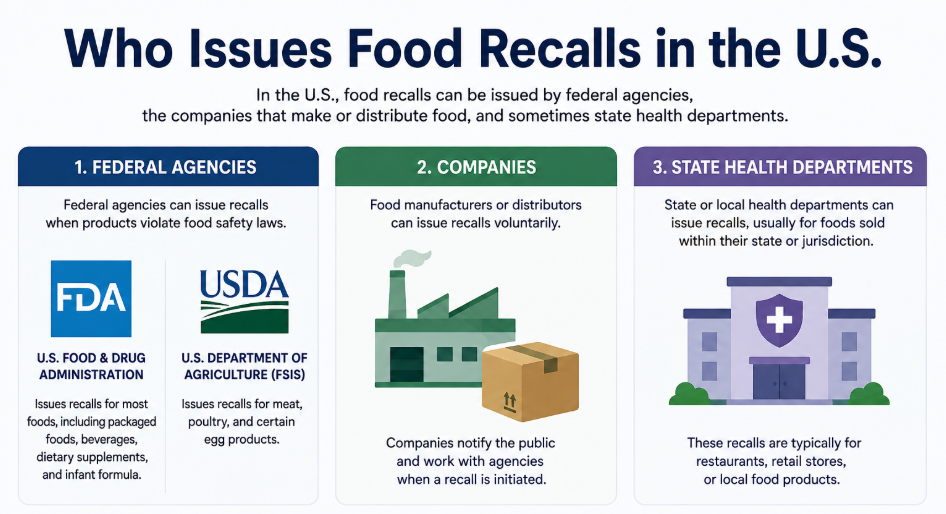
Two federal agencies handle most food recalls, so knowing the difference helps you find the right information faster.
| Agency | What It Covers | Where to Check |
|---|---|---|
| FDA (Food and Drug Administration) | Packaged foods, produce, dairy, seafood, dietary supplements | fda.gov/food/recalls-outbreaks-emergencies |
| FSIS (Food Safety and Inspection Service, part of USDA) | Meat, poultry, and processed egg products | fsis.usda.gov/recalls |
There’s also a combined resource, FoodSafety.gov, which pulls active alerts from both agencies into a single, searchable feed. So, if you only remember the product name and not which agency handles it, this is the fastest place to check.
The Three Recall Classes
Not every recall carries the same level of danger. That’s why regulators sort them into three classes:
- Class I – Reasonable chance the product could cause serious health problems or death. This is the most urgent category and includes most Listeria and undeclared major-allergen recalls.
- Class II – May cause temporary or reversible health effects, with a low chance of serious harm.
- Class III – Unlikely to cause any adverse health effects, often tied to labeling or minor quality issues.
Ultimately, knowing the class helps you gauge urgency at a glance. For example, a Class I recall for a product in your fridge is worth acting on immediately, while a Class III recall is worth noting but rarely an emergency.
How to Check If Your Food Has Been Recalled
Recall notices can feel vague if you’re skimming quickly, but they’re actually very specific by design. Specifically, a product only counts as recalled if every detail matches: brand name, product name, package size, and the “use by” or lot code printed on it.
So, here’s a simple way to check:
- Search FoodSafety.gov or the FDA/FSIS recall pages by product name or brand.
- Compare every detail on the notice not just the brand, but the exact use-by date, lot number, and package size.
- Sign up for email alerts from FDA or FSIS so future recalls come straight to your inbox instead of relying on the news.
- Check store loyalty apps or receipts, since many major grocery chains now send automatic recall notices tied to your purchase history.
However, if even one detail doesn’t match say the use-by date is different the product isn’t part of that recall, and you can safely keep using it.
ALSO READ: 80s Fashion Why This Bold Decade Still Rules Style Today
What to Do If You Have a Recalled Product
Once you confirm a match, don’t taste-test it to “check,” because contaminated food often looks, smells, and tastes completely normal.
- Don’t eat it. Even a small amount of Listeria or E. coli can cause illness in some people.
- Don’t open it if you plan to return it, since some stores require the original packaging for a refund.
- Follow the specific disposal instructions in the recall notice, because some ask you to throw the product away while others ask you to return it to the store.
- Sanitize surfaces that touched the product, including shelves, drawers, and any utensils or cutting boards.
- Watch for symptoms if you already ate some of it. Nausea, fever, or diarrhea are common early signs of foodborne illness, so it’s worth calling a doctor if symptoms are severe or you’re pregnant, elderly, or immunocompromised.
Who’s Most at Risk?
Foodborne illness doesn’t hit everyone the same way. Specifically, pregnant women, young children, older adults, and people with weakened immune systems face a much higher chance of serious complications from the same contaminated product that might only cause mild discomfort in a healthy adult. That’s why regulators treat recall notices tied to infant formula or baby food with extra urgency even a small distribution footprint gets flagged as high priority.
Are Food Recalls Becoming More Common?
It can feel that way, but it’s actually more accurate to say they’re becoming more visible. Better testing technology, faster lab results, and stronger reporting requirements now catch and announce problems sooner than before. Generally, that’s a good thing: a recall you hear about is a problem that regulators caught before more people got sick.
For instance, ready-to-eat products like deli salads, wraps, and sliced meats show up often in recent recall data because manufacturers don’t cook them again before you eat them, so any contamination doesn’t get neutralized by heat the way it would in, say, raw chicken you cook at home.
Final Thoughts
Food recalls aren’t something to panic over, but they’re also not something to ignore. Ultimately, the system works because regulators catch problems the real risk comes from not checking. So, bookmark FoodSafety.gov, glance at it occasionally, and you’ll rarely get caught off guard by what’s already sitting in your kitchen.
FAQs
Is it safe to eat food from an open package if only part of it is recalled?
No. If your product matches the recall details, you should discard or return the entire package, because contamination isn’t always evenly distributed so a “safe-looking” portion isn’t guaranteed to be safe.
How long do food recalls stay listed online?
FDA and FSIS keep recall notices archived on their websites, often for years, so you can still look up past recalls even after the news coverage fades.
Can I get a refund for a recalled product?
Most of the time, yes. Recall notices usually include instructions for a refund or replacement, either through the store where you bought it or directly from the manufacturer.
Do food recalls only happen in the U.S.?
No. Most countries run their own food safety agencies and recall systems for example, Canada has the CFIA, the UK has the FSA, and the EU runs a shared rapid alert system. That said, this guide focuses on the U.S. system, since FDA and FSIS oversee recalls there.
What’s the difference between a recall and a public health alert?
A recall formally removes a product from the market. By contrast, regulators issue a public health alert when a company hasn’t agreed to a formal recall yet, but the public still needs to know about a potential risk right away.
How do I know if a recall affects my specific store?
Recall notices usually list the states or regions where the product was distributed. So, if your state isn’t listed, the product likely wasn’t sold near you but it’s still worth double-checking the product details if you’re unsure.
For more updates visit: FUNDLY