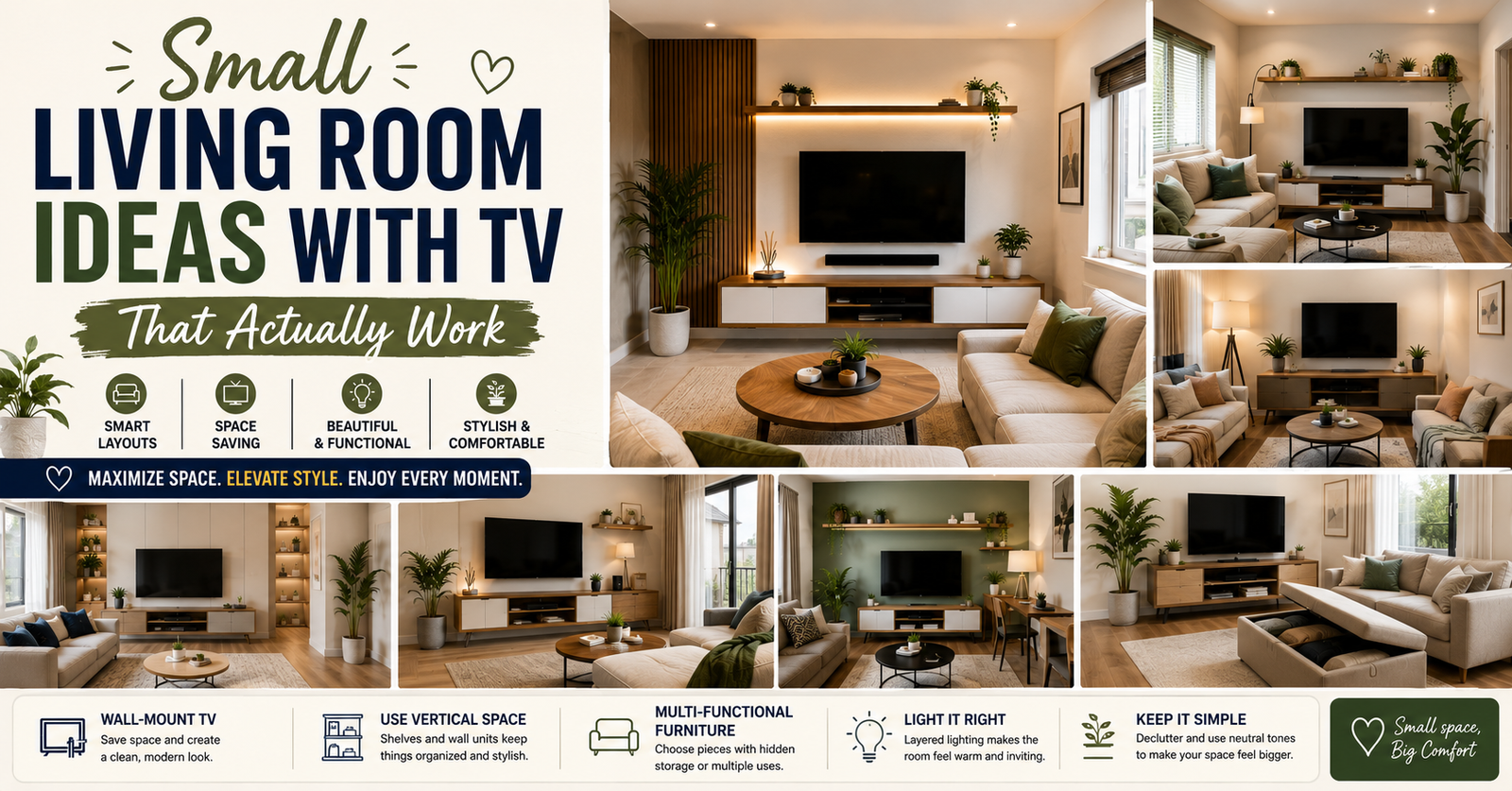
A tiny living room and a big TV don’t have to fight each other. With the right layout, the right furniture, and a few smart tricks, your TV can sit at the center of the room without making the space feel cramped or cluttered.
If you’ve ever stood in your living room wondering where the TV should even go — too close to the window, too far from the couch, or just awkwardly in the way — you’re not alone. Small rooms make every decision feel bigger than it should. The good news is that most of these problems have simple, tested fixes.
This guide walks through practical small living room ideas with TV placement, furniture choices, and layout tricks that real homeowners and designers use — no expensive renovations required.
Why Small Living Rooms Feel Even Smaller With a TV
A TV is a large, flat, dark rectangle. In a small room, that visual weight draws the eye and can make walls feel closer than they are. It’s not the TV itself that’s the problem — it’s usually one of three things:
- The TV is too big for the wall or viewing distance.
- The furniture is arranged to face the TV instead of the room.
- There’s no clear path to walk around the seating area.
Fixing these three issues solves most small-space TV problems before you even buy anything new.
How to Choose the Right TV Size for a Small Room
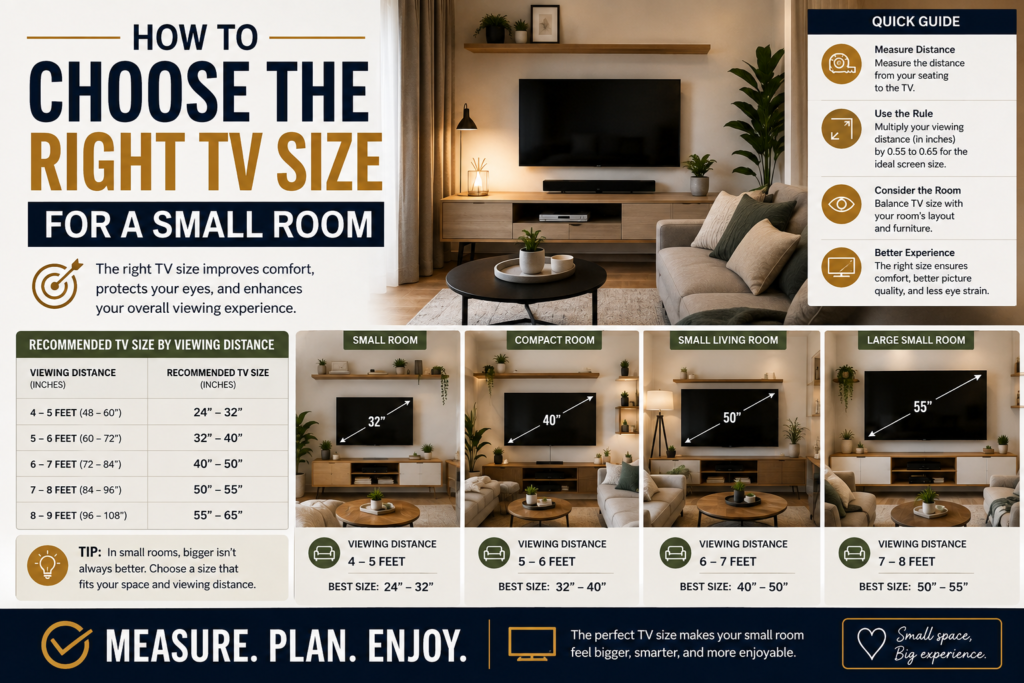
Bigger isn’t always better, especially in tight spaces. A TV that’s too large for the room overwhelms the walls and forces you to sit farther back than is comfortable.
A simple rule many interior designers use: divide your seating distance (in inches) by 1.5 to 2.5 to get a workable screen size range.
| Seating Distance | Suggested TV Size |
|---|---|
| 5–6 feet | 32–43 inches |
| 6–8 feet | 43–50 inches |
| 8–10 feet | 50–55 inches |
| 10+ feet | 55–65 inches |
If your couch sits 6 feet from the wall, a 43- to 50-inch TV usually looks balanced — not a 65-inch screen that dominates the room.
Best TV Placement Ideas for Small Living Rooms
1. Mount It on the Wall
Wall-mounting is the single most effective way to free up floor space in a small living room. A TV stand or console eats up several square feet of floor and visual clutter that a slim wall mount avoids entirely.
- Use a low-profile or tilting mount to keep the TV close to the wall.
- Hide cables inside the wall or behind a paintable cord cover.
- Mount at eye level when seated — usually 42–46 inches from the floor to the center of the screen.
2. Use a Corner Placement
Corners are often wasted space in small rooms. Placing the TV diagonally in a corner, either on a small corner stand or a corner wall mount, can open up the rest of the room for movement and seating.
This works especially well in square or oddly shaped rooms where there’s no single obvious “TV wall.”
3. Build the Room Around a Media Wall
Instead of treating the TV as an afterthought, some homeowners now design one wall specifically around it — combining the screen with floating shelves, a slim console, and accent paint or wood paneling. This creates a focal point rather than a floating black rectangle, which visually organizes a small room instead of cluttering it.
4. Position the TV Opposite the Widest Wall
In most small rectangular rooms, placing the TV on the shortest wall — facing the longest open stretch of floor — gives the best sightlines and leaves the most usable space for furniture and walking paths.
Furniture Choices That Save Space
Choose a Slim Media Console (or Skip It Entirely)
If you’re not wall-mounting, look for consoles under 14 inches deep. Floating consoles — mounted to the wall with no legs touching the floor — make the room feel more open because you can see the floor beneath them.
Multi-Purpose Seating
Ottomans with hidden storage, a loveseat instead of a full sofa, or a slim bench along a side wall all help avoid overcrowding while still giving you comfortable seating.
Skip the Coffee Table, or Downsize It
A large coffee table between the seating and the TV is one of the biggest space-wasters in small rooms. A nesting table set or a slim side table often works better, especially if you entertain more than you lounge.
Layout Tips for Small Living Rooms With a TV
- Float furniture away from walls when possible. Pulling a small sofa just a few inches off the wall can make a room feel more intentional, not smaller.
- Keep a clear walking path of at least 30 inches between furniture pieces so the room doesn’t feel like an obstacle course.
- Angle seating instead of lining it up straight, especially in square rooms — it breaks up the boxy feel.
- Use rugs to define the seating zone without visually cutting the room into smaller sections.
Color, Light, and Visual Tricks
Small rooms benefit from choices that make walls feel like they recede rather than close in.
- Light, neutral wall colors behind the TV reduce contrast and make the screen feel less like a heavy block on the wall.
- A large mirror on an adjacent wall reflects light and adds a sense of depth.
- Layered lighting — a floor lamp, a table lamp, and ambient ceiling light — prevents the TV from becoming the only light source in the room, which can make evenings feel dim and closed-in.
- Vertical shelving near the TV draws the eye upward, making ceilings feel taller and the room feel less squat.
Common Mistakes to Avoid
- Buying a TV too big for the room. It’s the fastest way to make a small space feel smaller.
- Blocking natural light with a bulky media unit in front of a window.
- Overloading the TV wall with too many shelves, frames, or decor — it competes with the screen for attention.
- Ignoring cable management. Visible tangled cords make even a well-designed small room look messy.
A Quick Real-World Example
A common layout that works well in a 10×12 foot living room: mount a 43-inch TV on the shorter wall, place a loveseat and one accent chair at a slight angle facing it, use a slim floating console below the screen, and add a round side table instead of a full coffee table. This setup keeps a clear walking path along one side of the room while still giving two to three people comfortable seating — without the room feeling boxed in.
Conclusion
You don’t need a bigger living room to make a TV setup that feels comfortable and well-designed — you need the right size screen, smart placement, and furniture that doesn’t fight for space. Start with wall-mounting or a slim console, keep sightlines and walking paths clear, and use light and color to help the room breathe. Small changes like these often make more difference than any renovation would.
FAQs
What is the best TV size for a small living room?
For most small rooms, a 43- to 50-inch TV works well when seating is 6 to 8 feet away. Going smaller keeps the screen from overwhelming the walls; going much larger can make the room feel cramped.
Should I mount my TV or use a stand in a small living room?
Wall-mounting is usually the better choice for small rooms because it frees up floor space and reduces visual clutter. A slim floating console is a good middle ground if you still want storage.
Where should the TV go in an odd-shaped small living room?
Corner placement or mounting on the shortest wall usually works best in irregular layouts, since it opens up the widest stretch of floor for seating and movement.
How do I hide TV cables in a small living room?
In-wall cable channels are the cleanest option if you’re comfortable with light wall work. Paintable cord covers or a cable sleeve behind the console are easier no-drill alternatives.
Does a big TV always make a small room look smaller?
Not always — it depends on wall color, seating distance, and how the TV is mounted. A well-proportioned TV with a light wall behind it can look balanced even in a compact room.
What should I avoid when arranging a small living room with a TV?
Avoid oversized coffee tables, TVs bigger than your seating distance supports, and cluttered TV walls. These are the most common reasons small rooms with a TV feel tighter than they need to.
For more updates visit: FUNDLY