The oblique muscle is an important part of the abdominal wall. It helps your body bend, twist, rotate, and stay stable during everyday movements and exercise. Strong oblique muscles can also support good posture and improve overall core control.
Many people think of the abs as one single muscle group, but the core contains several muscles that work together. The obliques are found along the sides of the abdomen and play a major role in movement and stability. Understanding how these muscles work can help you choose better exercises and train your core safely.
What Is the Oblique Muscle?
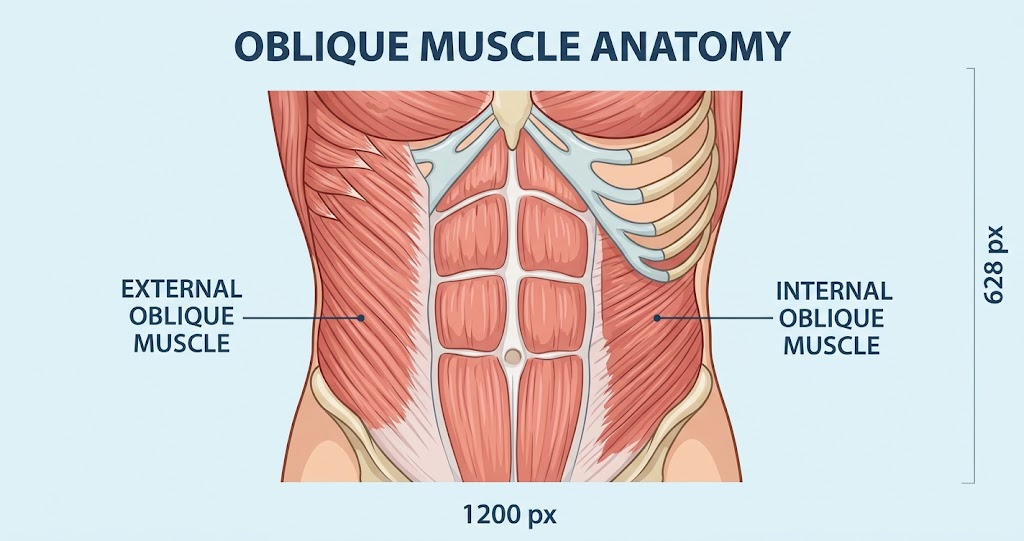
The term oblique muscle refers to the muscles located on the sides of your abdomen. Each side of the body contains two main abdominal oblique muscles: the external oblique and the internal oblique. These muscles sit in layers and work together with other core muscles.
The external oblique is the larger and more visible of the two. It sits closer to the surface of the body and runs from the ribs toward the pelvis. The internal oblique lies underneath the external oblique and contributes to many of the same movements.
Together, the oblique muscles help control the movement of your trunk. They are also involved in maintaining stability when you walk, lift objects, run, bend, or change direction.
Where Is the Oblique Muscle Located?
The oblique muscles are located on both sides of the abdomen, between the lower ribs and the pelvis. The external obliques are closer to the skin, while the internal obliques are positioned underneath them.
Their position allows them to influence the movement of the spine and torso. When these muscles contract, they can help rotate or bend the trunk. They also work with the rectus abdominis and transverse abdominis to provide support around the midsection.
Because the obliques connect the upper and lower parts of the body, they are important during movements that require coordination between the torso and hips.
Types of Oblique Muscles
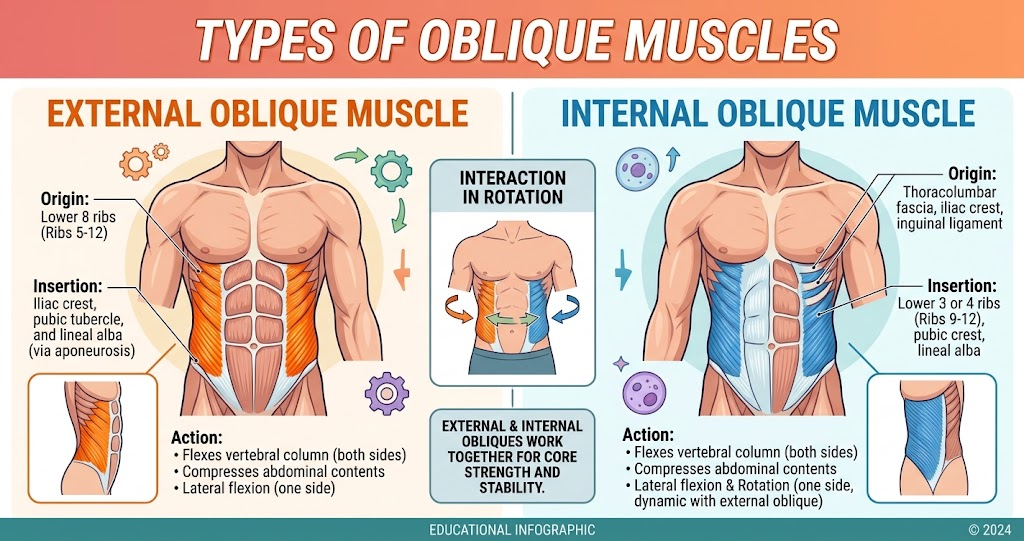
There are two primary types of oblique muscle on each side of the body. The external oblique is the outer layer, while the internal oblique is deeper.
External Oblique
The external oblique is a broad muscle positioned on the outer side of the abdomen. It contributes to trunk rotation, side bending, and abdominal compression.
When one external oblique contracts, it can help rotate the torso toward the opposite side. When both sides work together, they can help bend the trunk and support the abdominal wall.
Internal Oblique
The internal oblique sits beneath the external oblique. It also helps with trunk rotation and side bending while providing support to the abdominal region.
The internal oblique works closely with the external oblique and other core muscles. This teamwork helps the body control movements rather than simply producing force.
What Does the Oblique Muscle Do?
The oblique muscle has several important functions. One of its main roles is helping the torso rotate. This movement is useful when turning your body, swinging a racket, throwing a ball, or performing rotational exercises.
The obliques also help with lateral flexion, which means bending the torso to one side. They contribute to spinal stability and help keep the trunk controlled during movement.
Another important function is abdominal compression. The oblique muscles can increase pressure within the abdominal cavity, which helps support the trunk during activities that require strength and stability.
Why Are Strong Obliques Important?
Strong obliques can improve core stability and help the body handle movements more efficiently. A stable core gives the arms and legs a stronger foundation during many physical activities.
The oblique muscles also contribute to posture and controlled movement. When the core muscles work properly together, they can help reduce unnecessary movement around the trunk during exercise and daily activities.
However, training the obliques is not only about appearance. Functional core strength can be useful for athletes, gym users, runners, and people who simply want better control during everyday movements.
Best Exercises for the Oblique Muscle
You can train the oblique muscle with many bodyweight and resistance exercises. The right exercise depends on your fitness level, goals, and ability to perform the movement with good technique.
Side Plank
The side plank is a simple exercise that challenges the muscles responsible for lateral stability. It requires you to support your body while keeping your torso aligned.
Beginners can start with shorter holds and gradually increase the duration as their core strength improves. Keeping the hips lifted and the body in a straight line helps maintain proper positioning.
Bicycle Crunch
The bicycle crunch combines abdominal flexion with trunk rotation. It can involve both the abdominal muscles and the obliques when performed with controlled movement.
Rather than moving quickly, focus on bringing the torso and legs together smoothly. Slow repetitions can make it easier to maintain control and avoid relying on momentum.
Russian Twist
The Russian twist uses a rotational movement to challenge the core. It can be performed without equipment or with light resistance.
The key is to rotate through the torso while keeping the movement controlled. Using excessive weight or moving too quickly can make it harder to maintain good technique.
Side Bend
Side bends directly challenge the muscles involved in lateral flexion. They can be performed using bodyweight or external resistance.
Use a controlled range of motion and avoid forcing the torso beyond a comfortable position. Gradually increasing resistance can make the exercise more challenging over time.
How to Train the Oblique Muscle Safely
Good technique is more important than using heavy resistance. Core exercises should be performed with controlled movements and stable positioning.
Start with an exercise that matches your current fitness level. As your strength improves, you can gradually increase repetitions, duration, resistance, or exercise difficulty.
It is also important to train the entire core rather than focusing only on the obliques. The rectus abdominis, transverse abdominis, back muscles, hips, and other supporting muscles all contribute to overall core function.
Oblique Muscle and Body Shape
The oblique muscles contribute to the appearance of the sides of the abdomen. Developing them can make the midsection look stronger and more defined when overall body composition allows the muscles to be visible.
However, exercising the obliques does not specifically remove fat from the sides of the waist. Fat loss occurs through overall changes in energy balance rather than by targeting one particular area with exercise.
A balanced training routine combined with appropriate nutrition is generally more useful for improving overall body composition.
Common Mistakes When Training Obliques
One common mistake is performing rotational exercises too quickly. Fast movements can reduce control and make it difficult to maintain proper form.
Another mistake is using more resistance than you can safely manage. Heavy weights are not necessary to make every oblique exercise effective. Controlled technique should come first.
Some people also train only one part of the core. A well-rounded routine should include exercises that challenge stability, flexion, extension, and controlled rotation where appropriate.
How Often Should You Train the Oblique Muscle?
The ideal training frequency depends on the rest of your workout routine, exercise intensity, and recovery. The obliques are involved in many compound movements, so they may already receive indirect training.
For many people, dedicated core exercises can be included several times per week while allowing enough recovery between challenging sessions. Beginners should start gradually rather than performing large amounts of abdominal work immediately.
If an exercise causes sharp pain, unusual discomfort, or persistent symptoms, stop the movement and seek appropriate professional guidance.
Oblique Muscle Exercises for Beginners
Beginners can start with simple movements that build control before progressing to more difficult exercises. Side planks from the knees, controlled bicycle crunches, and gentle rotational movements can help introduce the basic functions of the obliques.
The goal should be consistent technique rather than completing as many repetitions as possible. As strength and coordination improve, more demanding variations can be introduced.
Conclusion
The oblique muscle is a key part of the core and helps the body rotate, bend sideways, and maintain trunk stability. The external and internal obliques work with other abdominal and back muscles to control movement and support the body.
Training the obliques can improve core strength and movement control when exercises are performed consistently and with good technique. A balanced approach that trains the whole core is generally more useful than focusing on one muscle alone.
FAQs
What is the oblique muscle?
The oblique muscle refers to the abdominal muscles located along the sides of the torso. The main oblique muscles are the external oblique and internal oblique, which help with rotation, side bending, stability, and abdominal compression.
Where are the oblique muscles located?
The oblique muscles are located on the sides of the abdomen between the ribs and pelvis. The external oblique is closer to the surface, while the internal oblique is located underneath it.
What is the main function of the oblique muscle?
The oblique muscle helps rotate and bend the torso while contributing to core stability. It also helps compress the abdominal area and supports controlled movement of the trunk.
What is the best exercise for the oblique muscle?
There is no single exercise that is best for everyone. Side planks, bicycle crunches, Russian twists, and controlled side bends can all train the obliques when performed with suitable technique.
Can oblique exercises reduce belly fat?
Oblique exercises can strengthen the muscles but cannot specifically remove fat from the sides of the waist. Changes in overall body fat generally require a broader approach involving physical activity and nutrition.
Can you train your oblique muscle every day?
The obliques are involved in many daily and exercise movements, so they do not necessarily need intense direct training every day. Allowing recovery between demanding workouts can help support consistent training.
For more updates visit: FUNDLY